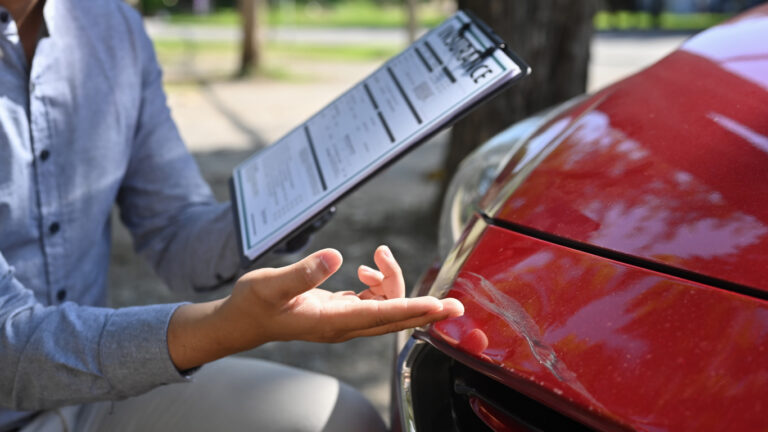
After a car accident, dealing with insurance paperwork can feel almost as stressful as the crash itself. This is especially true when you are injured, missing work, and trying to understand what Allstate requires before it pays your claim. Knowing how the claim process works in Utah can help you avoid delays, protect your rights, and reduce the risk of an unfair denial.
This article explains how to file a car accident claim with Allstate in Utah. Keep reading to learn more about the evidence you need and how Utah law affects the process.
Understanding Allstate’s Role After a Utah Car Accident
Allstate may become involved in your accident claim in several different ways. The role Allstate plays affects both the process and your strategy.
Allstate may be:
- Your own insurance company, handling personal injury protection (PIP) benefits, collision coverage, or uninsured and underinsured motorist claims
- The at-fault driver’s insurance company, responsible for paying your injury and property damage claim
- Or, both, if multiple policies apply
Utah is a no-fault state for car accidents. This means your own insurance usually pays initial medical expenses through PIP coverage, regardless of who caused the crash. However, fault still matters once injuries exceed certain thresholds or when you pursue compensation beyond PIP limits.
Understanding Allstate’s position in your case helps you know what it owes you and what it may try to avoid paying.
How to File a Car Accident Claim with Allstate in Utah
Filing a claim with Allstate involves more than a single phone call. Each step matters, and mistakes made early in the process can have a significant impact on your entire case.
Step 1: Report the Accident Promptly
You should notify Allstate of the accident as soon as possible. You can do this by calling Allstate’s claim hotline, filing a claim through Allstate’s online portal, or using the Allstate mobile app.
When reporting the accident, stick to basic facts, including:
- The date, time, and location of the crash
- The vehicles involved
- Whether police responded
- Whether anyone was injured
Avoid speculation about fault or minimizing injuries at this stage.
Step 2: Obtain and Review the Police Report
In Utah, police reports often play a central role in insurance claims. Allstate will almost always request a copy.
The police report may include:
- Driver and vehicle information
- Witness statements
- Diagrams of the crash scene
- The officer’s preliminary assessment of liability
Errors in police reports are common. Reviewing the report early allows you or your lawyer to correct inaccuracies before they influence the claim decision.
Step 3: Use PIP Benefits First
Utah law requires drivers to carry at least $3,000 in PIP coverage.
If Allstate is your insurer, your PIP benefits may cover:
- Medical expenses
- A portion of lost wages
- Certain household services
PIP coverage typically applies regardless of fault. It generally does not cover damages for pain and suffering. Once your injuries exceed Utah’s threshold (either $3,000 in medical expenses or permanent impairment), you may pursue a liability claim against the at-fault driver.
Step 4: Submit Evidence and Documentation
Allstate will not simply take your word for your losses. You must support your claim with clear documentation.
Evidence required in a car accident claim can include:
- Medical records and bills
- Proof of lost income, such as pay stubs or employer letters
- Photos or videos of vehicle damage
- Photos of visible injuries
- Repair estimates
- Witness contact information
Missing or incomplete documentation often leads to delays or low settlement offers.
Step 5: Communicate Carefully with the Adjuster
Allstate may ask for a recorded statement. While this may seem routine, these statements often serve as tools to limit liability.
Adjusters may:
- Ask leading questions
- Request opinions about liability
- Press you to downplay pain or treatment
- Suggest quick settlements before injuries are fully diagnosed
You are not required to give a recorded statement without legal advice. What you say can be used later to reduce or deny your claim.
Contact Our St. George Car Accident Lawyers at Feller & Wendt, LLC for a Free Consultation
Filing a car accident claim with Allstate in Utah involves more than just paperwork. While some claims are resolved smoothly, many are not. Knowing your rights and seeking legal guidance when needed can make a meaningful difference in your recovery.
If you were injured in a crash and need help dealing with Allstate in Utah, contact Feller Wendt, LLC for a free consultation. Let a skilled St. George car accident lawyer protect your interests and help you pursue the compensation
Feller & Wendt, LLC – Layton Office
67 S. Main St. #100
Layton, UT, 84041
801-499-5060
Feller & Wendt, LLC – St. George Office (by appointment only)
169 W 2710 S Cir, Suite 202-A
St. George, UT, 84790
801-499-5060
Feller & Wendt, LLC – Salt Lake City Office
4424 South 700 East, Suite 240
Millcreek, UT, 84107
801-499-5060
Feller & Wendt, LLC – Phoenix Office
1 N 1st St, Suite 7550
Phoenix, AZ, 85004
480-702-2277

Feller & Wendt, LLC – Mesa Office
2222 S Dobson Rd, # 500
Mesa, AZ, 85202
480-702-2277
Feller & Wendt, LLC – Boise Office
5536 N Eagle Rd,
Boise, ID, 83713
208-595-6953